

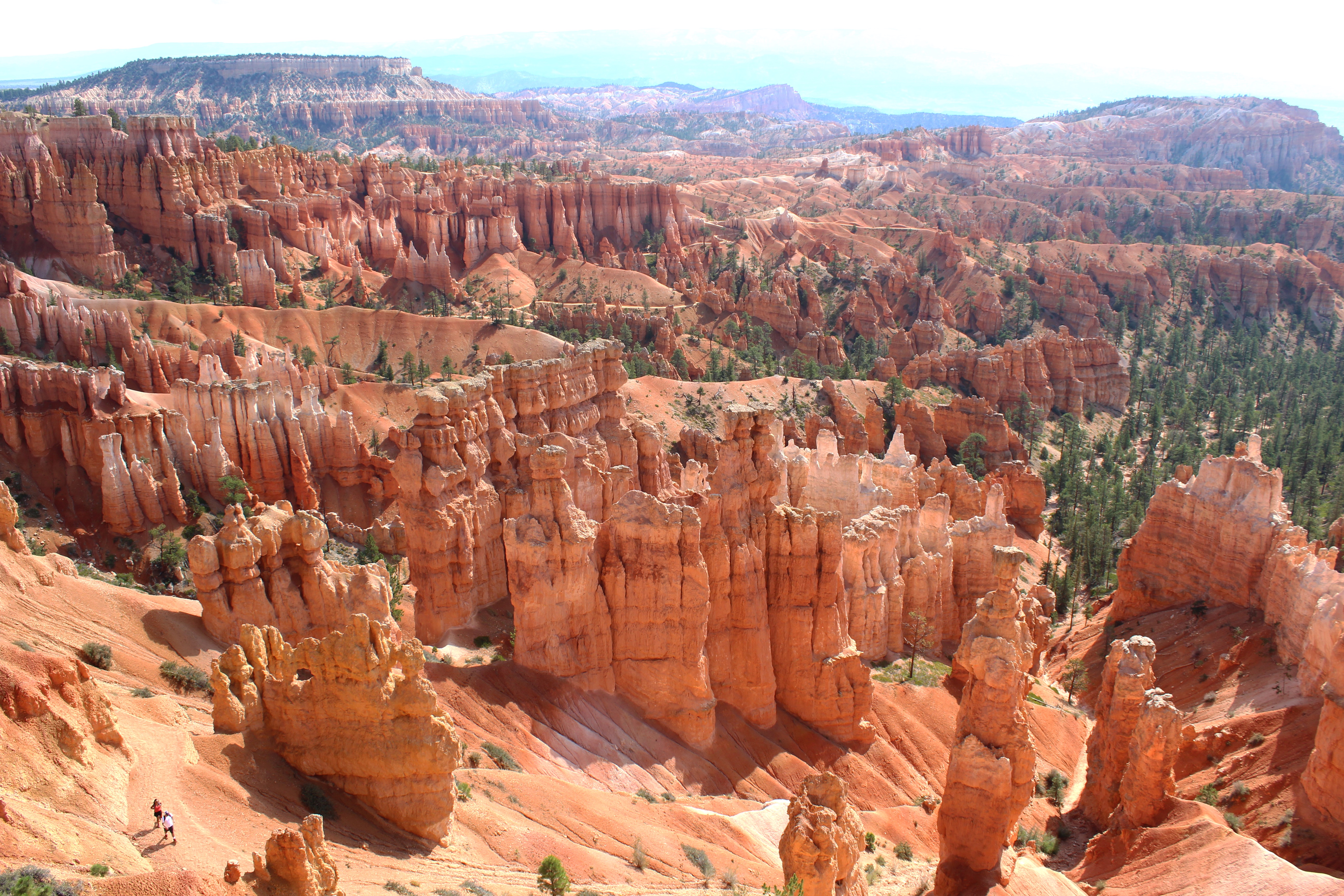
I believe the only intelligible thing to come to my brain when the Bryce Canyon Amphitheater came into view was wow. In my University Aesthetics class, we studied the sublime in which philosopher Edmund Burke says that there can be things, most often in nature, that are so vastly striking, massive, and incredible that we find them frightening but in the best way possible. Bryce Canyon is one of those places.
Utah is home to many of the Nation’s most famous National Parks including Zion and Arches. There is magic in Bryce Canyon, in the towering hoodoos, in the bright soils, and in years of growth and destruction that have made it unlike anywhere else on Earth.
The Park was established in 1928 and has been a showstopper ever since. The famous Hoodoos of Bryce Canyon formed in a freshwater lake 40 million years ago. At the time, there were no rivers to help the water flow out from these natural lakes thus the sediment collected. When the Paunsaugunt Plateau was caught and lifted by the Colorado Plateau, the water rushed out and left the area. Over time, the rushing water created the beautiful Hoodoos we see today. Although hoodoos can be found all over the world, Bryce Canyon has the highest concentration of them anywhere.
Hiking in Bryce
Seeing Bryce consists of going on hikes and exploring viewpoints.
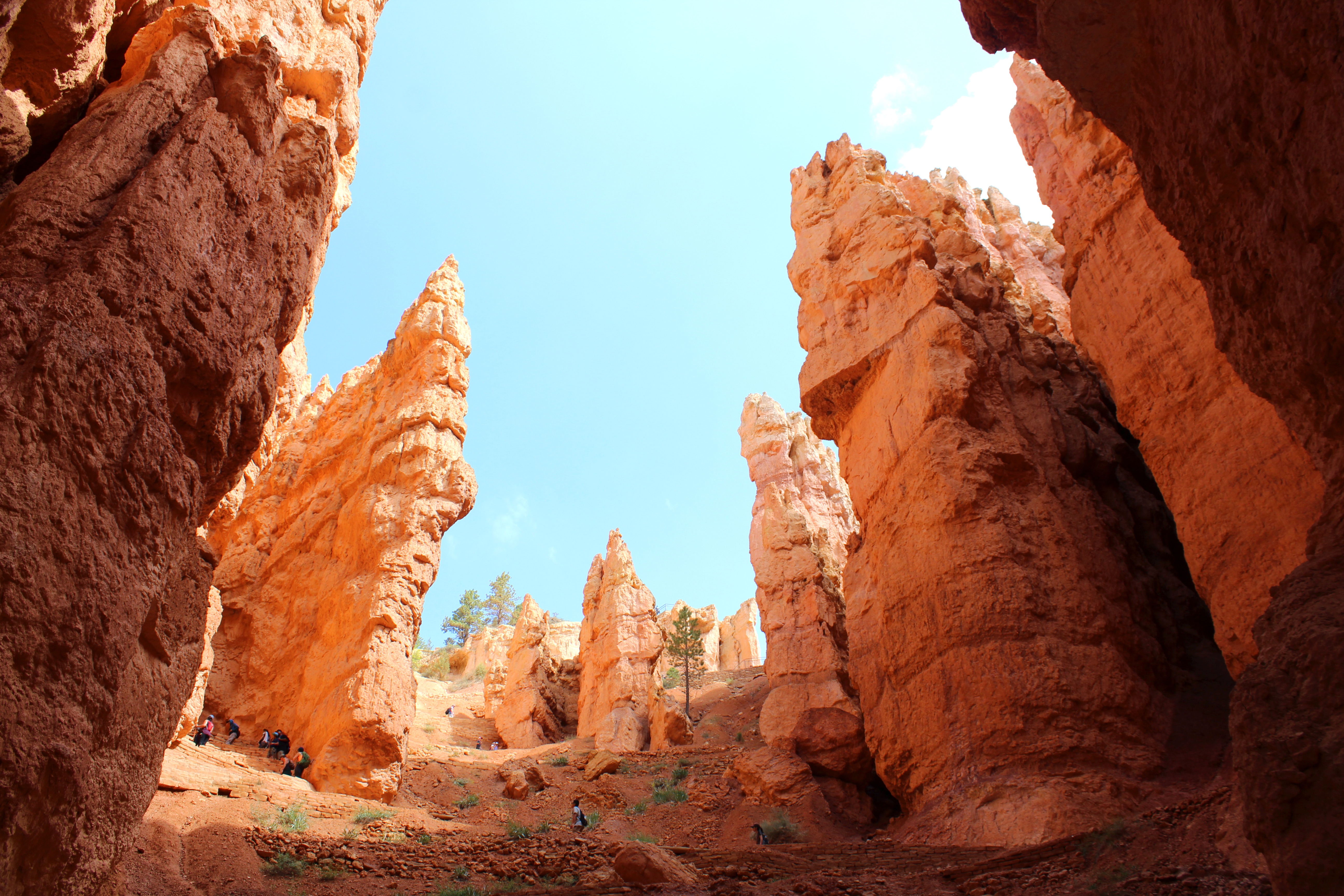
The first hike we embarked on was the Wall Street Trail, a short slot canyon that descends into the heart of the Amphitheater. It connects to the Queen’s Garden Trail and is a popular hike in Bryce. As you hike down the steep switchbacks of the canyon, the walls begin to soar overhead, brilliant, red-orange, iron-rich, and a reminder of how powerful water and wind can be.
As you near the bottom of Wall Street, the trail narrows and meets the Navajo Loop Trail. We hiked back up Wall Street from the bottom to the TOP of the Navajo Loop Trail to see Thor’s Hammer and Two Bridges. However, you can start on the Navajo Loop Trail and go clockwise, ending your hike by going UP wall Street instead of down.
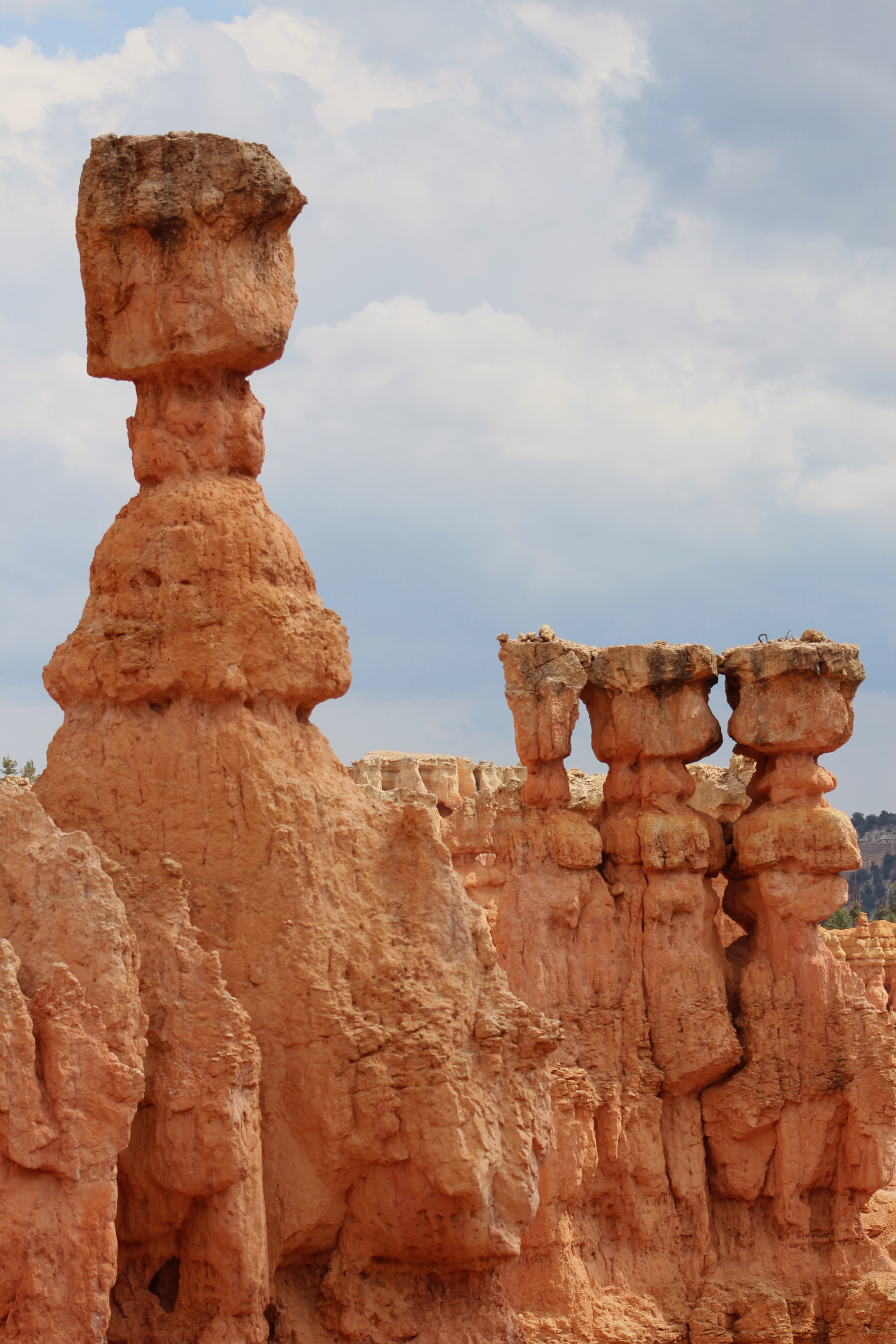
Thor’s Hammer, The Three Sisters & Two Bridges
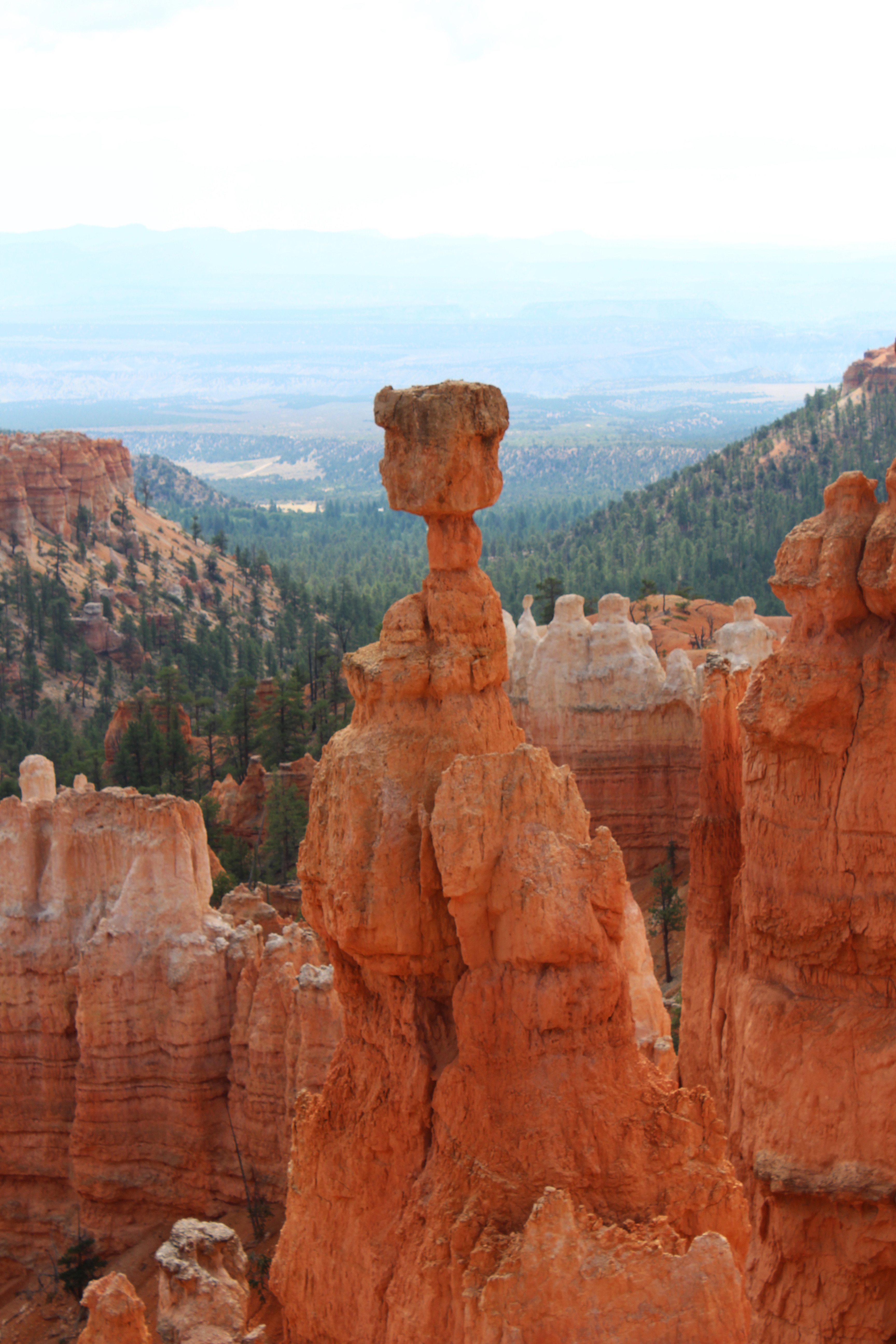
Thor’s Hammer is one of the most famous Hoodoos in Bryce Canyon. This popular photo spot seems like it shouldn’t be able to stand. Right next to Thor’s Hammer is the Three Sisters formation.
The hike down Navajo Loop Trail to see these formations and then back up through Wall Street is considered a moderate hike and averages about 1.4 miles in length. Totally doable for anyone who is active or willing to take their time. However, the elevation gain can be pretty brutal, my friend and I had to stop a few times to get air back into our lungs.
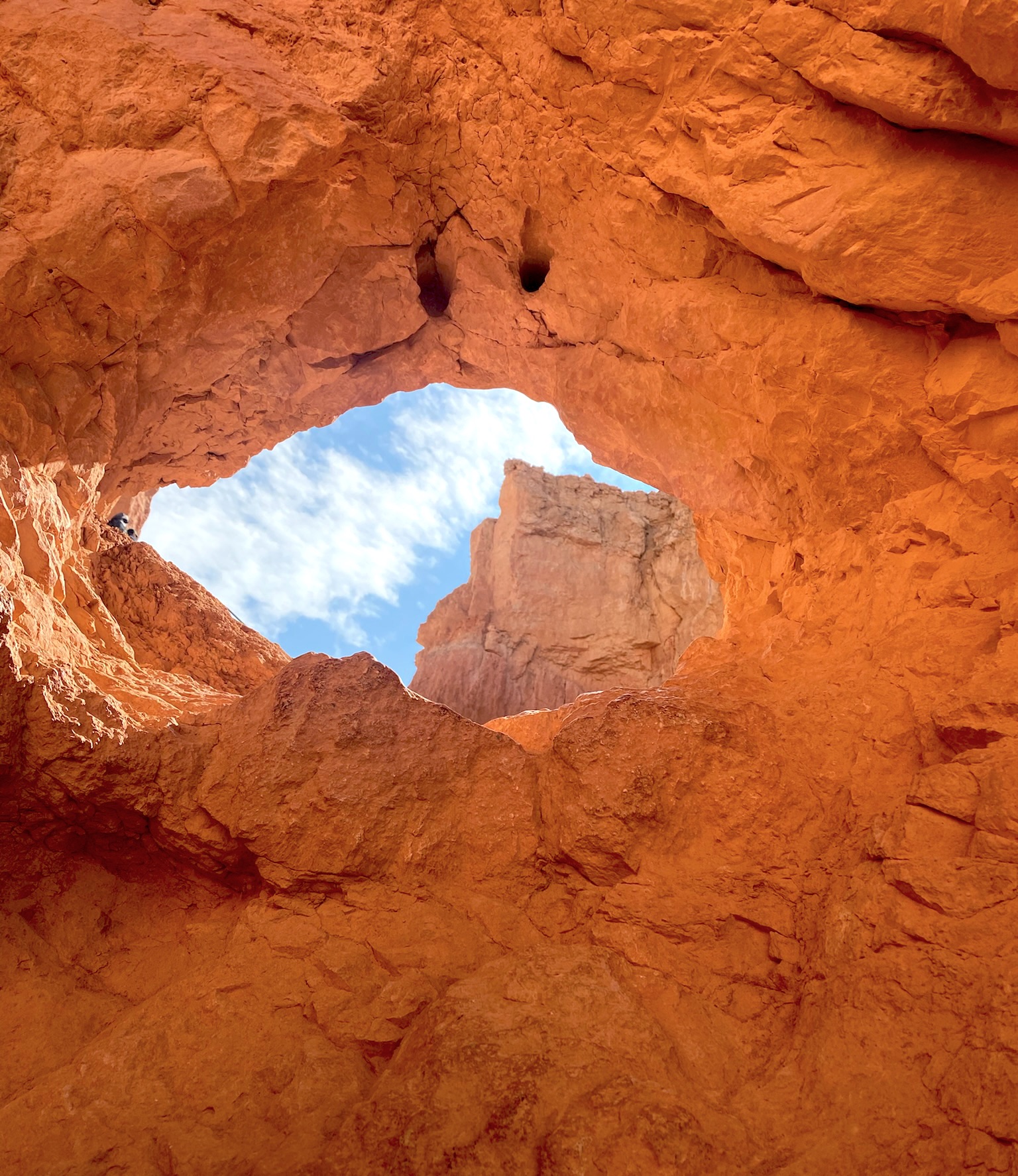
Two Bridges is a short stop off the main trail where two natural bridges connect two canyon walls. The Bridges themselves are unsuitable for humans to walk on however, they are pretty cool to check out.
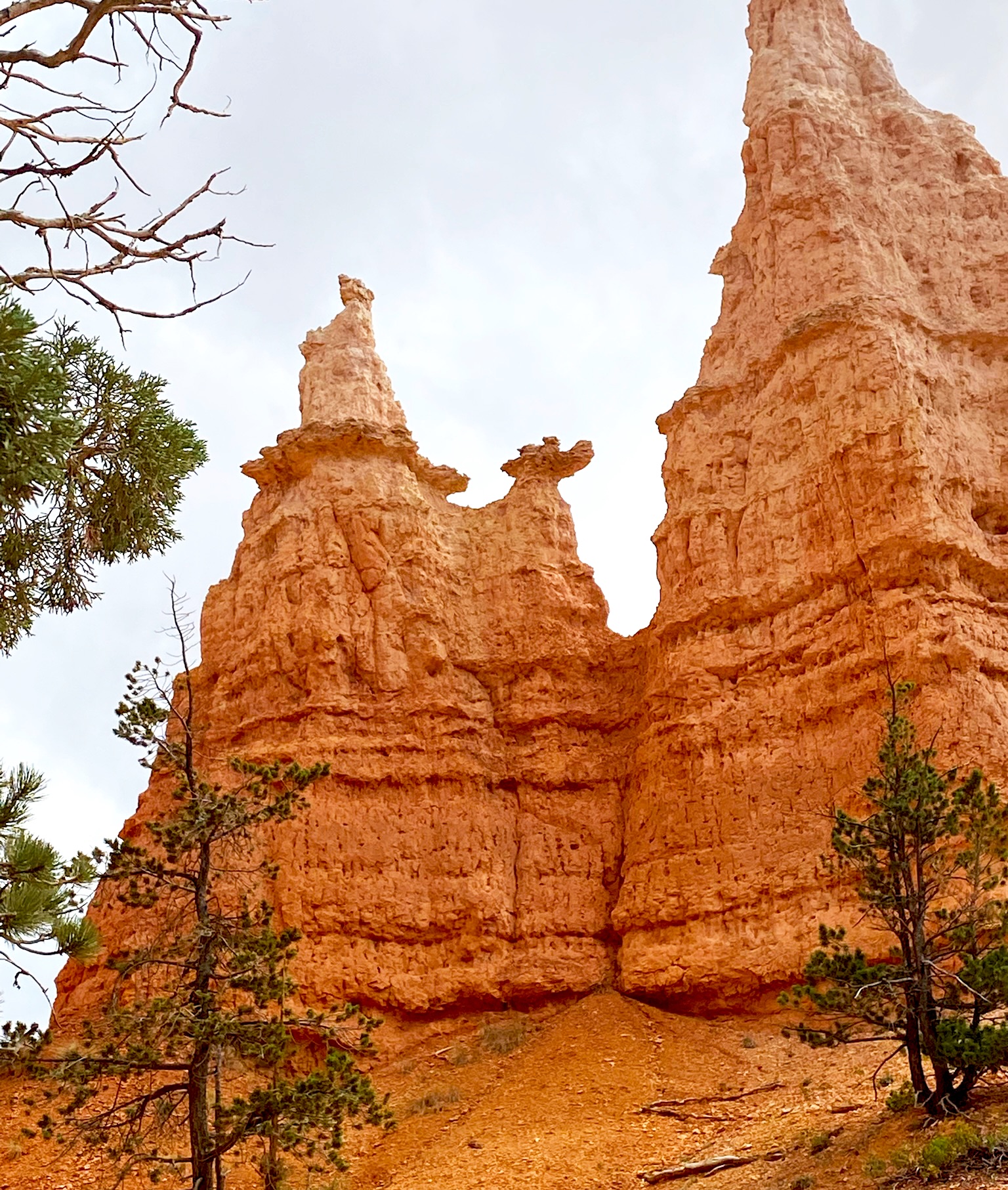
After this, we added the Queen’s Garden Trail, which is not a loop and ends at Sunrise Point. Queen’s Garden Trail and the bottom of Navajo Loop Trail take you through tall pines and slightly away from the amphitheater. However, once in Queens Garden, you’ll see those beautiful hoodoos again. When you see the queen, it’s pretty clear why the Queen’s Garden is called that. A hoodoo that looks JUST like Queen Victoria is very in character for a dramatic queen like herself.
Trail Mileage:
Queens Garden / Navajo Combination Loop: 2.9 Miles (Moderate)
Navajo Loop Trail 1.3 Miles (Moderate)
Best way to see Wall Street, two bridges, Thor’s hammer, and the three sisters
Vistas
Non-hikers can enjoy the beauty of Bryce Canyon by visiting the incredible vistas that dot the main road of the National Park. Leave your car in one of the lots for the day and hop on the free park bus that stops at all the main vista points along the trail.
Some popular stops are Bryce Point where you can view the amphitheater from the south, Inspiration Point for a top view of the canyon, and Sunset Point for stunning sunset views of the canyon.
With your own car, you can embark on the Southern Scenic Drive. This 18-mile trail has vista points that look over the stunning canyon as you climb in elevation. Natural Bridge is only seen from this drive as park buses do not go this far. Each vista point has several parking spots where visitors can park and walk up to the vista to take in the canyon.
Park Safety
Bryce is beautiful year-round, with white snow capping the red hoodoos in a magical snow globe scene. Temperatures between October – May frequently fall below freezing at night, and October experiences its fair share of snowstorms.
June, July, and August temps hover in the 60s-80s. July and August see most of the park’s rain. These monsoon storms can be highly volatile with lighting and flash flooding. A day that starts dry can end with washed-out trails and hail. Experiencing a flood-type storm at the bottom of a canyon is not a good time. If you are visiting Bryce, consider the weather and your hiking abilities.
 The Great Big Wonder
Leave a comment