

As a whole, Italy is a feast for the eyes; Florence though, Florence is something special. Around every corner, statues wait to spring to life, and colorful marble stretches toward the sky. Art seeps through the streets and walls, and you can’t help but be inspired. The city truly deserves a few days of your time. Brimming with museums that take hours to explore and tourists vying for space, Florence requires as much time as you can give it. But if you, like me, didn’t plan enough time for Florence you can still see some of the major hits in one day, this is your guide.
7:30 AM – The Opera Di Santa Maria Del Fiore (The Duomo)

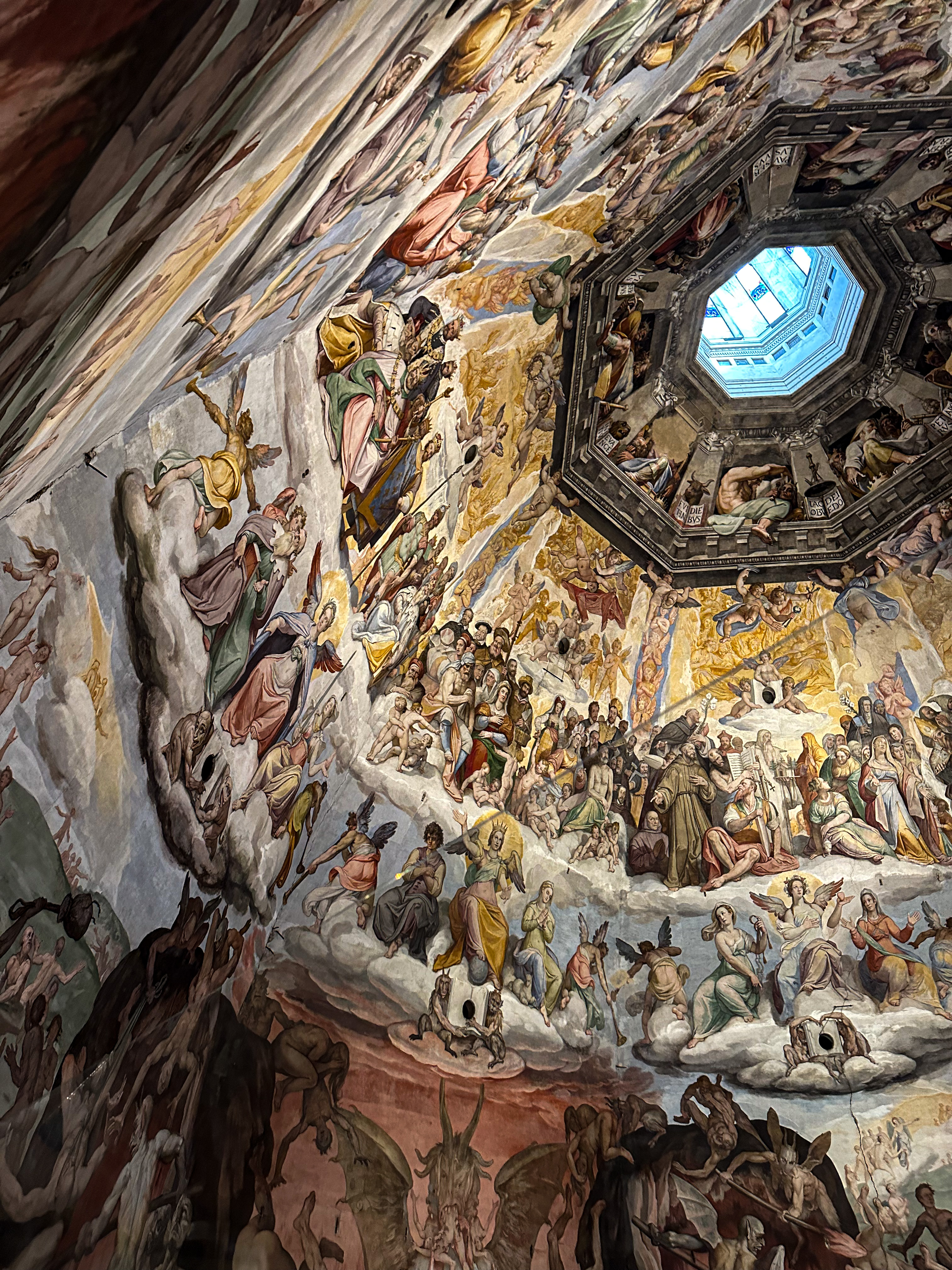
The Opera Di Santa Maria Del Fiore, more commonly known as the Duomo, is one of the most iconic sights and landmarks in Florence. This monumental historic sight includes the famous Duomo, the bell tower, a museum, the baptistry, and the basilica. In 1296, Arnolfo di Cambio began construction on the Cathedral. He worked on it for several decades before passing away and leaving the project for other architects to complete. In 1418, Brunelleschi eventually won a competition to design the missing dome to top the Cathedral with his idea to use a self-supporting design, one free of buttressing. In 1436 construction of the Duomo was completed.
The exterior of the Duomo containing red marble from Siena, green from Prato, and white from Carrara stretches on and on. Inside the Duomo, the Last Judgment, a fresco painted by Giorgio Vasari and Federico Zuccaro contains Colorful angels, saints, and even parts of Hell. Completed in 1579, it’s a colorful and overwhelming piece of art. The baptistry was consecrated in 1059 and contains a ceiling mosaic completed in the 13 / 14th centuries. On the outside of the baptistry lies “The Gates of Paradise” created in the 13th century by 70-year-old goldsmith and sculptor Lorenzo Ghiberti. The technique used in “The Gates of Paradise”, representing 3-dimensional space on a two-dimensional plane, was a marvel of art and engineering at the time.
Book one of the first tours at the Duomo around 8 AM. Get there at 7:15 – 7:30 and walk around the Duomo to take photos of the pristine and breathtaking Cathedral before it becomes surrounded by tourists. By 9 AM, the streets of Florence are stuffed with tourists competing for the best spot for photos. Beat the crowd there. The early morning will also help you beat the heat. You don’t want to climb to the top of the dome in the heat of the day.
The Brunelleschi Pass grants you access to the top of the Dome (Copula), the Bell Tower (Campanile), the Baptistry (Battistero), the Museum (Museo), and Santa Reparata. This is a great ticket to book as it gives you access to all the spaces you’d want to see. Book your tour time to start with the dome tour at the earliest time you can this will give you access up to the top of the dome, then explore the other offerings on your own timetable. The Bell Tower tends to have a long line to get inside as it does not have timed entry hit this early after the dome tour, leaving the Museum, Babistry, and Santa Reparata to explore as you please.
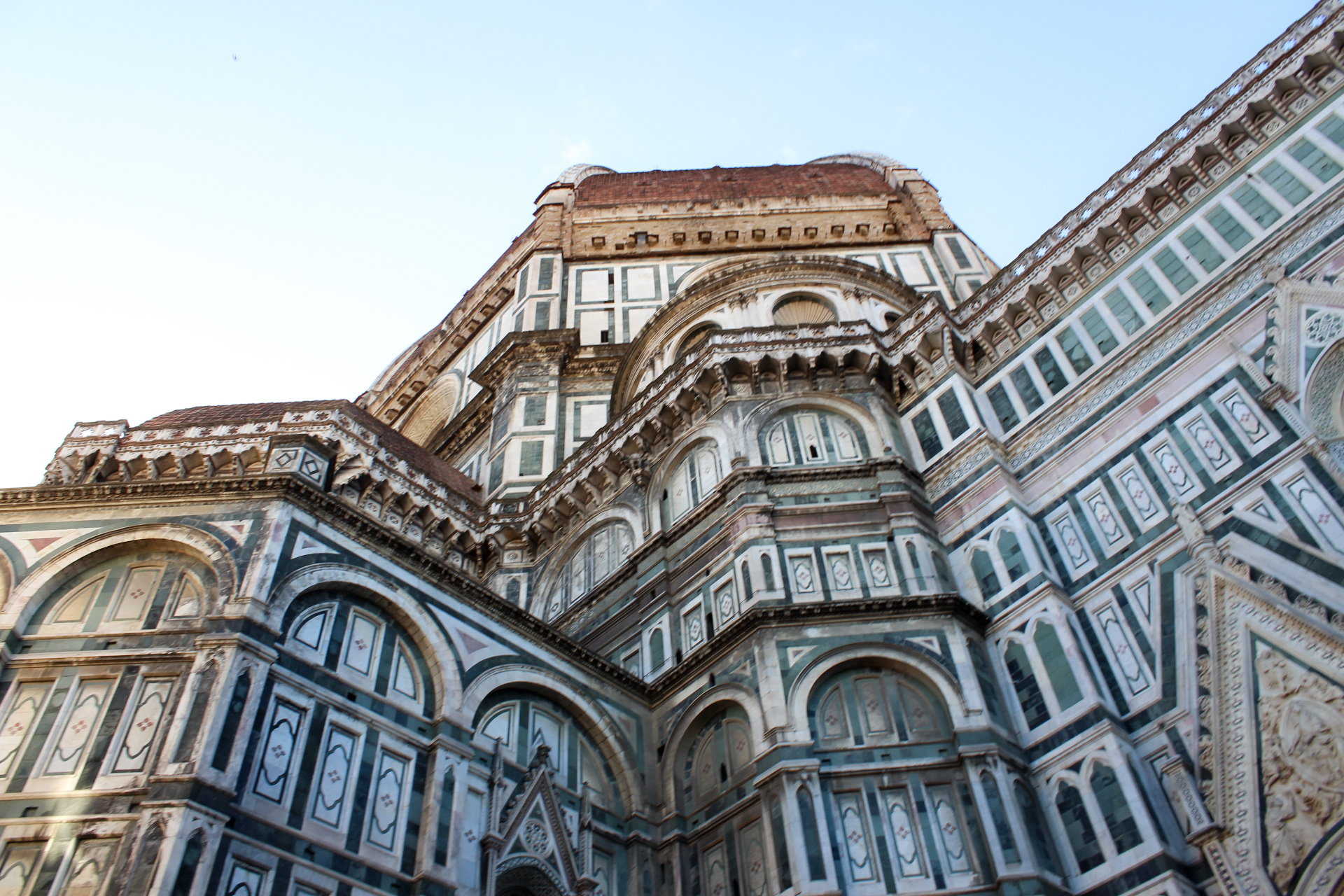

The Dome and the Bell Tower require steep, intense, narrow climbs up 400+ stairs with no elevators on-site. I recommend researching before visiting if you struggle with heights, small spaces, and steep climbs. I am claustrophobic and afraid of heights, so I found the climb to the top quite difficult. The top of the Duomo gives little peace of mind. I was glued to the wall with fear. Even I struggled with the climb, and up I am very active. I suggest reading about the climb and being aware of your own health and capabilities.
Visiting all the locations at the Opera Di Santa Maria Del Fiore can easily take 3.5 hours. Your ticket is good for three days after the time of your Dome tour, so if you have extra time you can spread your visit out.
1:00 PM – See Michelangelo’s David at Galleria Dell’Accademia Di Firenze
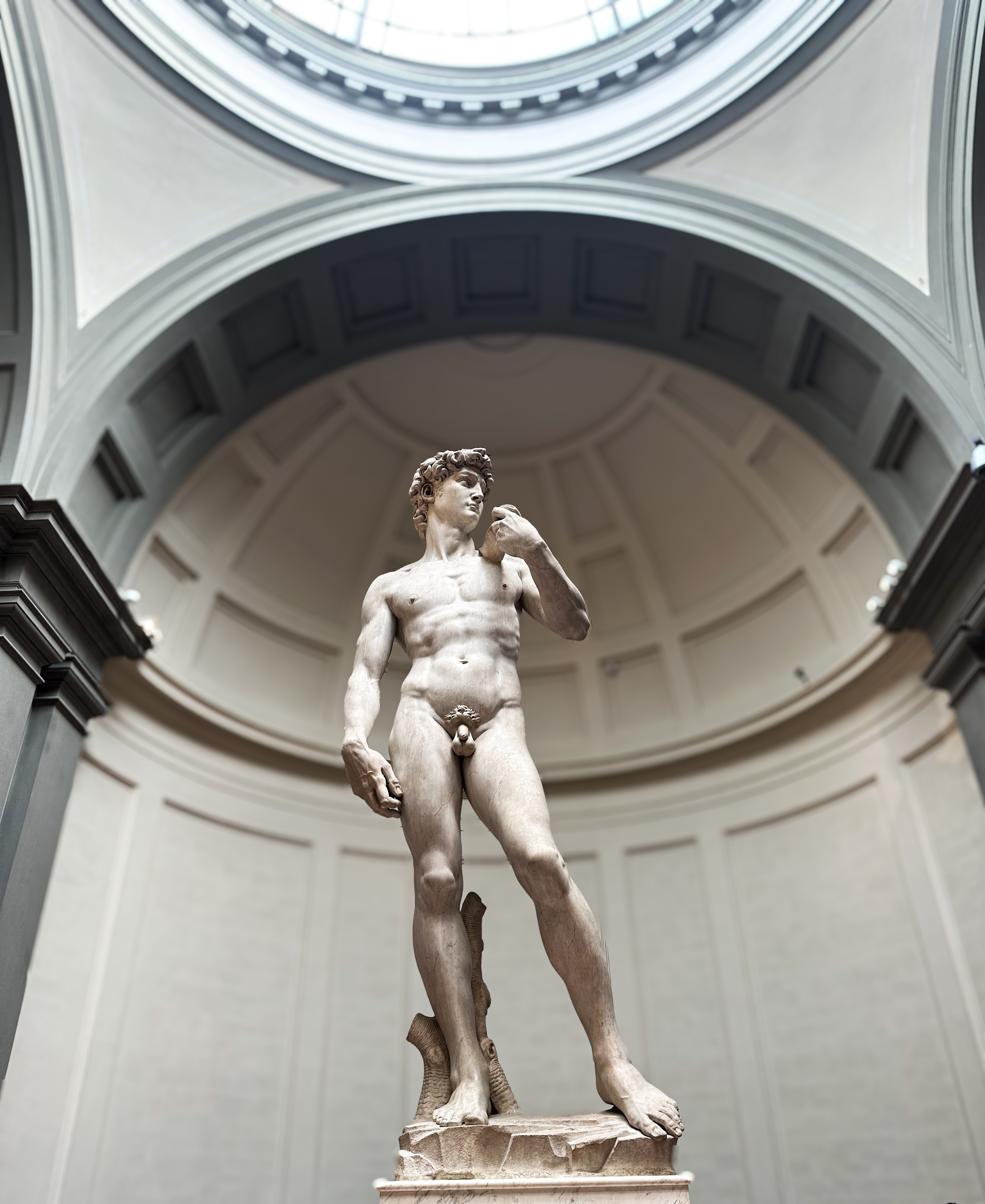
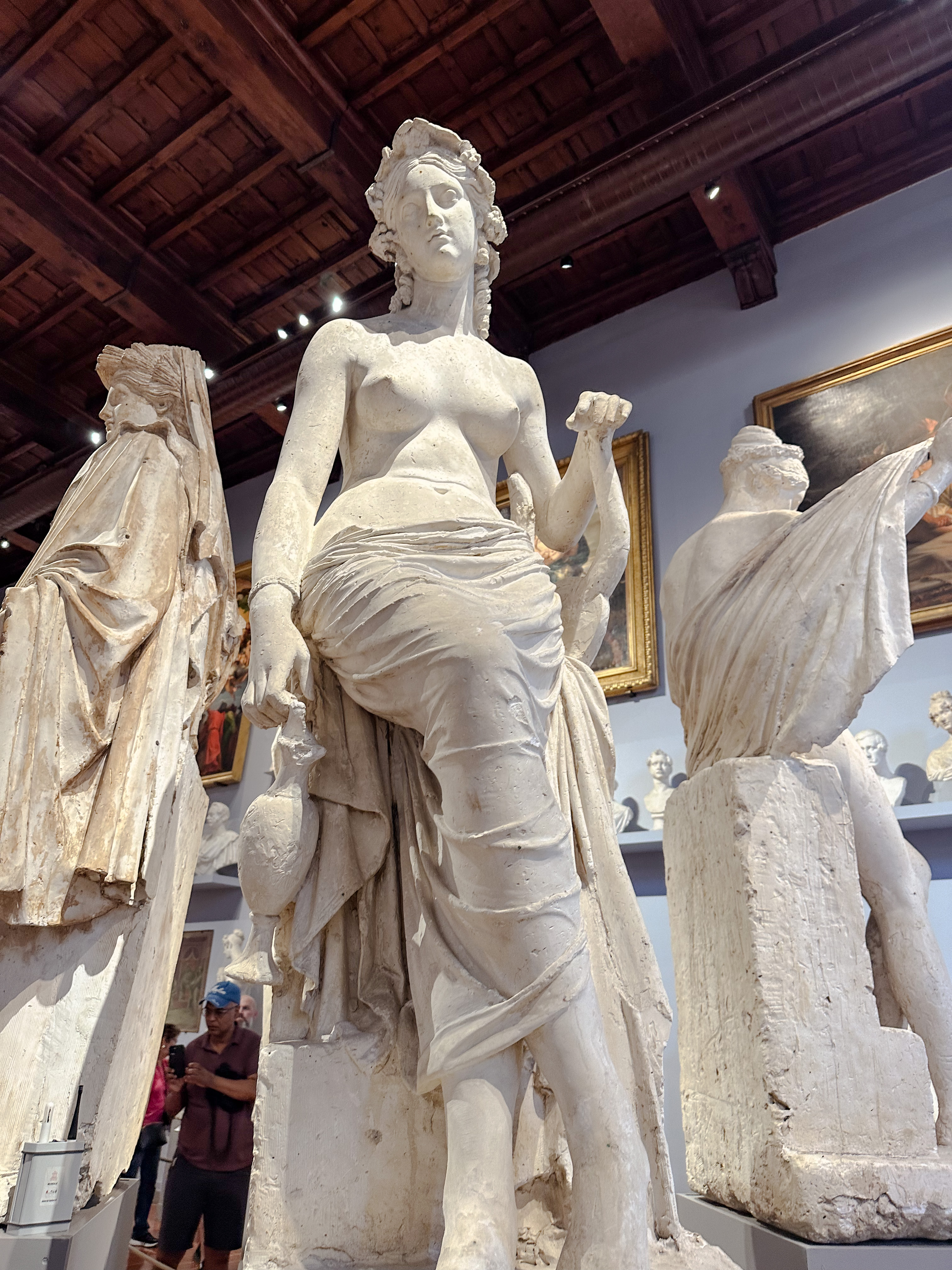
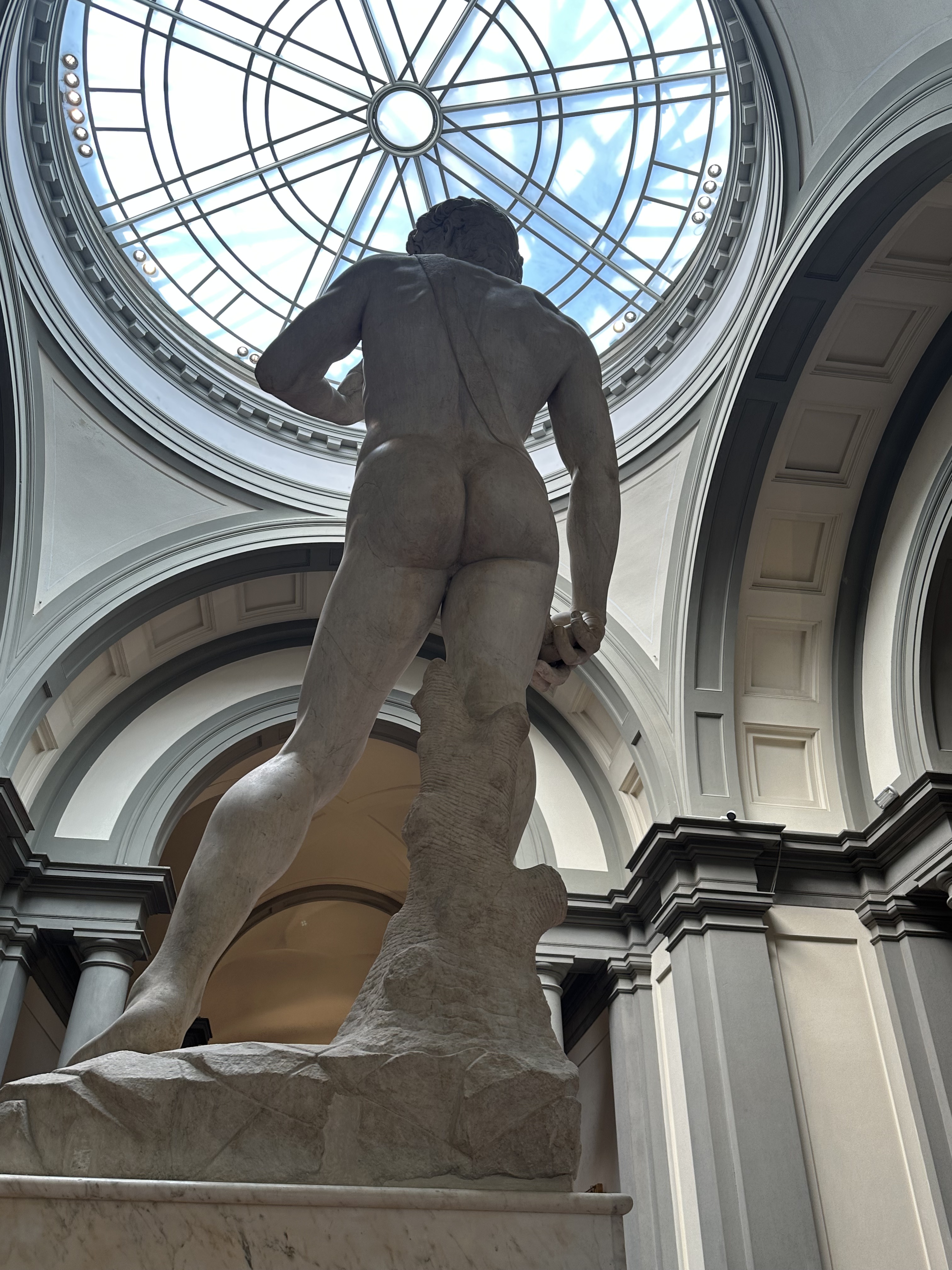
At the end of a long hallway in the Galleria Dell’Accademia Di Firenze, you’ll find David, washed in sunlight from his skylight and surrounded by a sea of tourists. In 1504, Michelangelo unveiled the statue “The Giant” in Palazzo Vecchio, its original home. He was only 26 when he started the statue in 1501, taking the project on after two other artists quit, blaming the poor marble selection. At the unveiling, David had several gilded elements, including the garland around his head. In 1873, David was moved to the gallery to preserve and protect the historic art piece. Until Michelangelo’s depiction of David, artists used to portray David after the battle typically depicted with Goliath’s head, but this David is portrayed before the battle. Now David rests safe and sound in the museum, accompanied by dozens of other statues, paintings, and historic musical instruments. Paintings from the 13th to early 15th centuries adorn the walls. The plaster cast gallery is particularly interesting as it houses more statues and castings than the eye can even take in.
You’ll need to book a timed entry to the Galleria Dell’Accademia with a 15-minute time frame to enter. Put aside 1-2 hours, to truly experience the whole museum. This gives ample time to take in David, enjoy an audio tour, and explore both floors of the museum.
The outside of the museum is swarming with tourists, locals selling goods, and scammers. Be sure not to step on the items on the ground outside the Museum in the streets as scammers may blame you, cause a scene, and ask you to pay for “damages”.
3:30 PM – Piazza Della Signora (Loggia della Signoria & Neptune’s Fountain)
Walk over to the Piazza Della Signora from the Academy for several free-to-see historic statues and fountains. In the shadow of the Palazzo Vecchio (a historic site itself), you’ll find Neptune’s Fountain. The fountain was Commissioned by Cosimo Medici and sculpted between 1560 and 1565 by Bartolomeo Ammannati and Giambologna. It’s made of Carrara marble, and Neptune looks strikingly similar to Cosimo Medici. The fountain features Neptune, his chariot pulled by four horses Scylla and Charybdis, and more.
This is also the site where Girolamo Savonarola, Domenico Buonvicini, and Silvestro Maruffi were hanged and burned on counts of hearsay and sedition. While being hung the gallows were set ablaze, and when they had burned, their ashes were scattered in the Arno. You’ll see a plaque near the statue commemorating this monumental event.
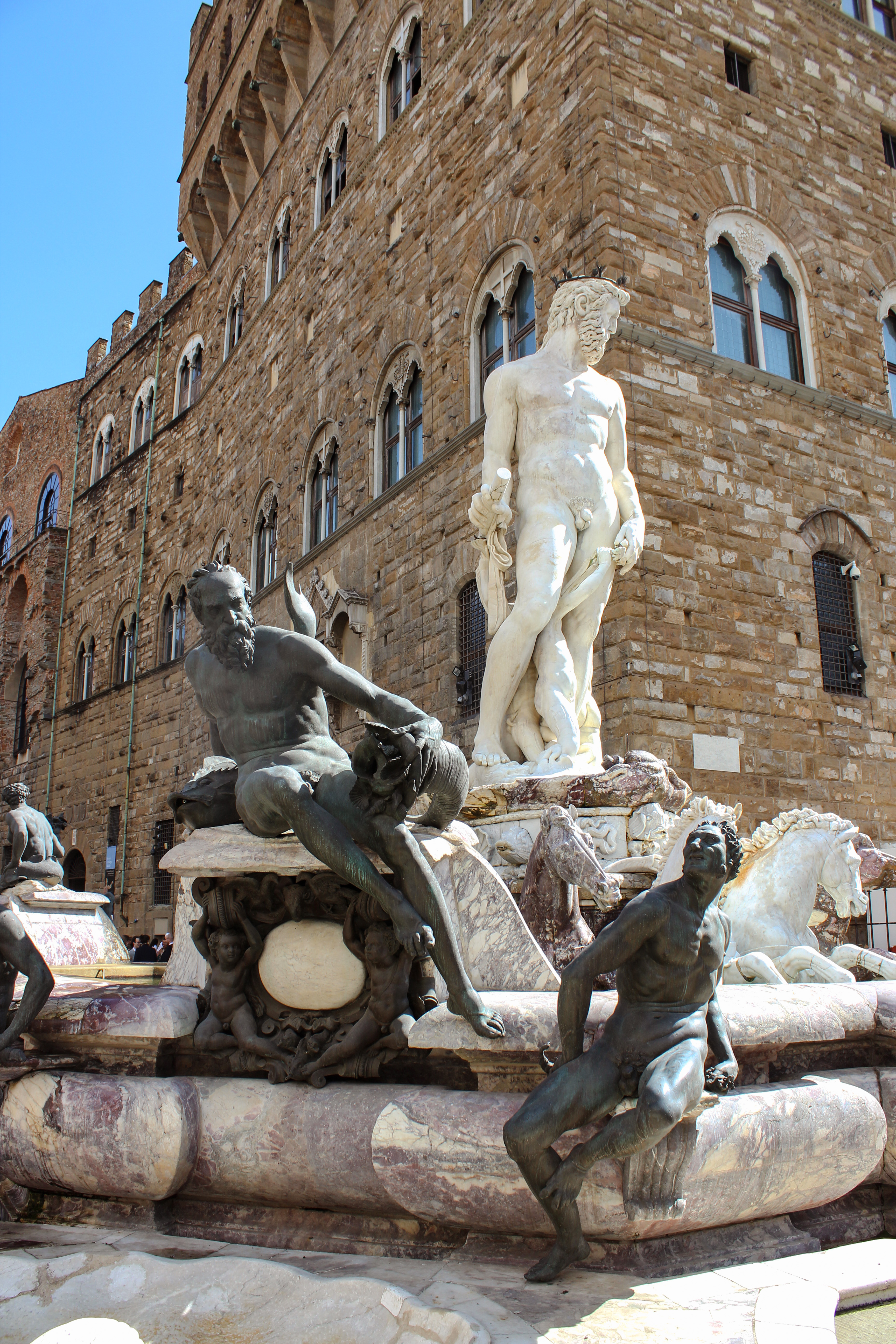
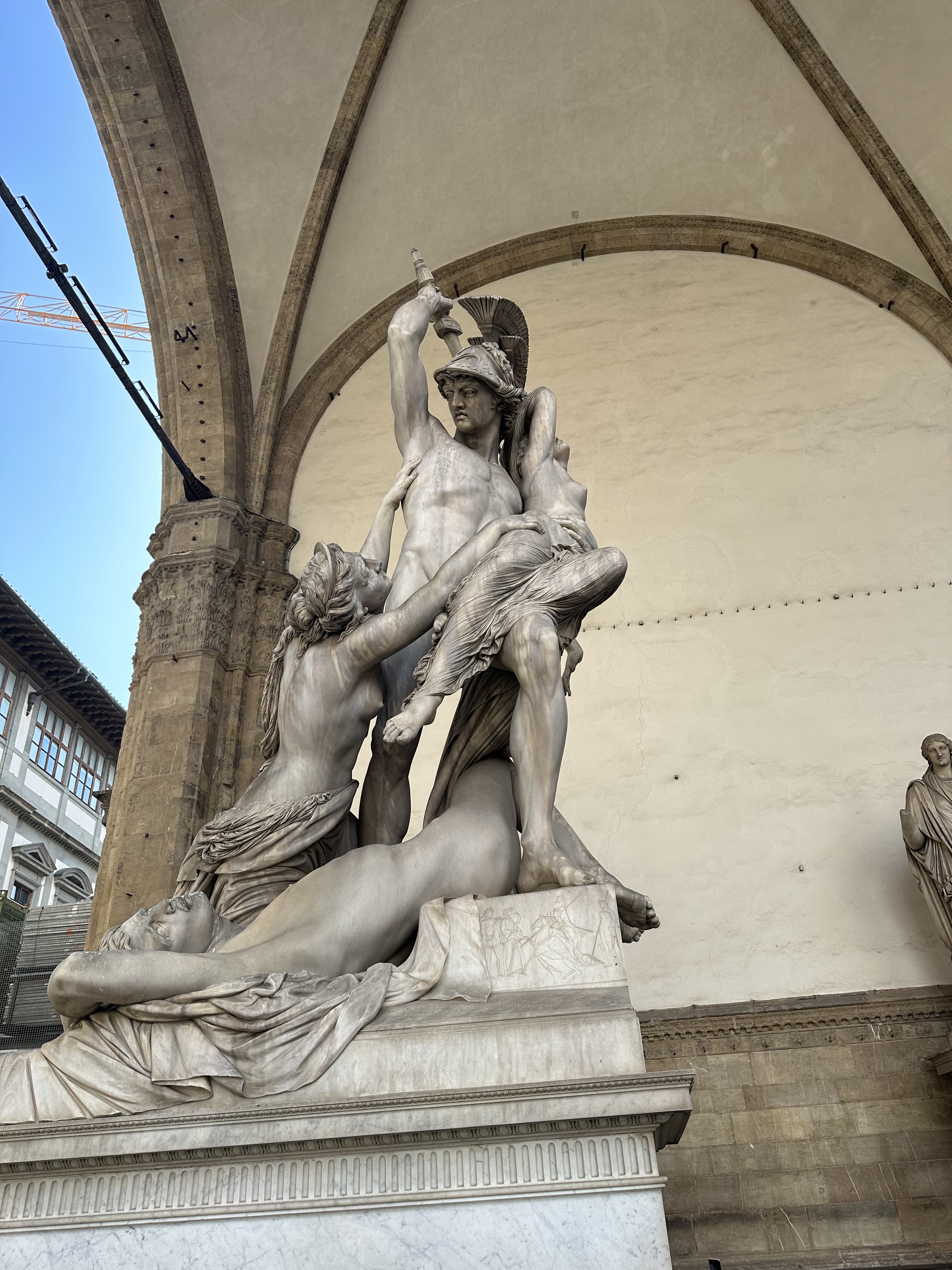
The Loggia Della Signoria was built between 1376 and 1382 and is an example of an open-air sculpture gallery. The Loggia was originally built to house public ceremonies. However, when the Medici family came into power, they used this space to house art they enjoyed and believed helped push their political visions. Two large lions at the top of the stairs greet visitors. One of the lions is from Roman times the other was created in 1598 and placed in its current spot in 1789. Some of the statues you can see here include The Rape of the Sabine Woman by Giambologna, the Medici family’s official sculptor. The bronze Perseus by Benvenuto Cellini shows the Greek hero with Medusa’s head.
4:30 PM – The Uffizi
The Uffizi is home to some of Italy’s most famous works. Some of the artists whose work you can find in the Uffizi include Piero Della Francesca, Botticelli, Correggio, Caravaggio, Michelangelo, Leonardo, and more.
In 1560, Cosimo Medici originally commissioned Giorgio Vasari to create the Uffizi as the headquarters of Florence’s judicial and administrative services. After Vasari died in 1574, Alfonso Parigi and Bernardo Buontalenti took over the construction of the Uffizi, and the building was opened as an art gallery by Francesco I de’ Medice in 1581. In 1769, it finally opened to the public.
There are many famous works in the Uffizi. Some of the most recognizable are Sandro Botticelli’s Birth of Venus and La Primavera, Caravaggio’s Medusa, Della Francesca’s The Duke and Duchess of Urbino Federico da Montefeltro and Battista Sforza, Leonardo Di Vinci’s The Annunciation and Titian’s Venus of Urbino.
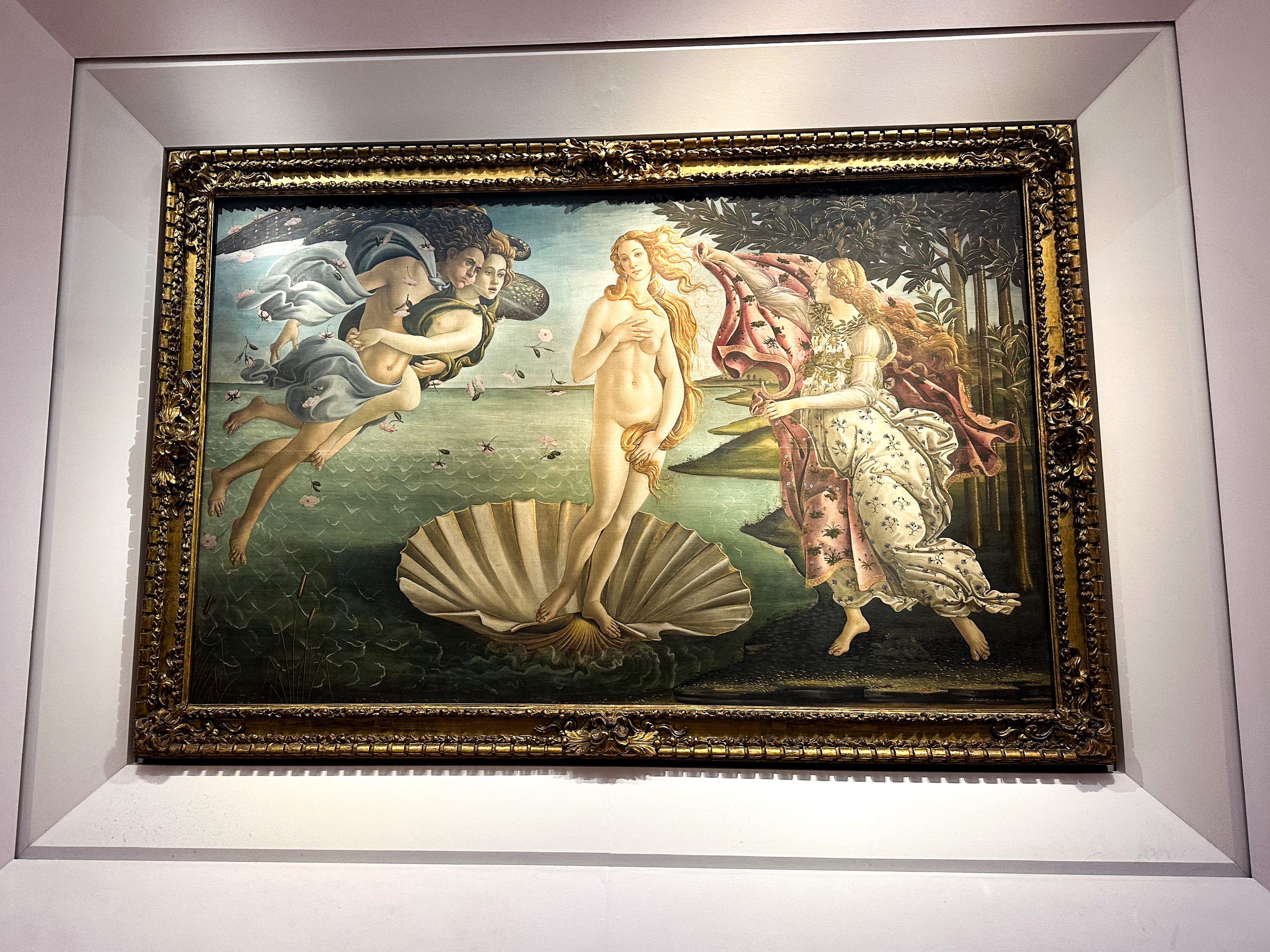
The Birth of Venus by Botticelli is presumed to have been painted around 1484 for Lorenzo di Pierfrancesco de Medici’s villa. Although there is nothing definitive about who it was originally commissioned for. The painting depicts Venus birthed from sea foam and blown by Zephyr –the God of the West Wind. Aura the spring wind is waiting to cover Venus in a pink cloak. It is a prime example of the Renaissance, bringing forward the human nude which had been made unpopular due to the heavy influence of religious subject matter and belief systems. It sheds the medieval concept of nudity as a sin and instead uses it to portray innocence. However, the painting is not devoid of sensuality take for instance the wind’s intertwined legs and Hora’s dress which clings to her body.
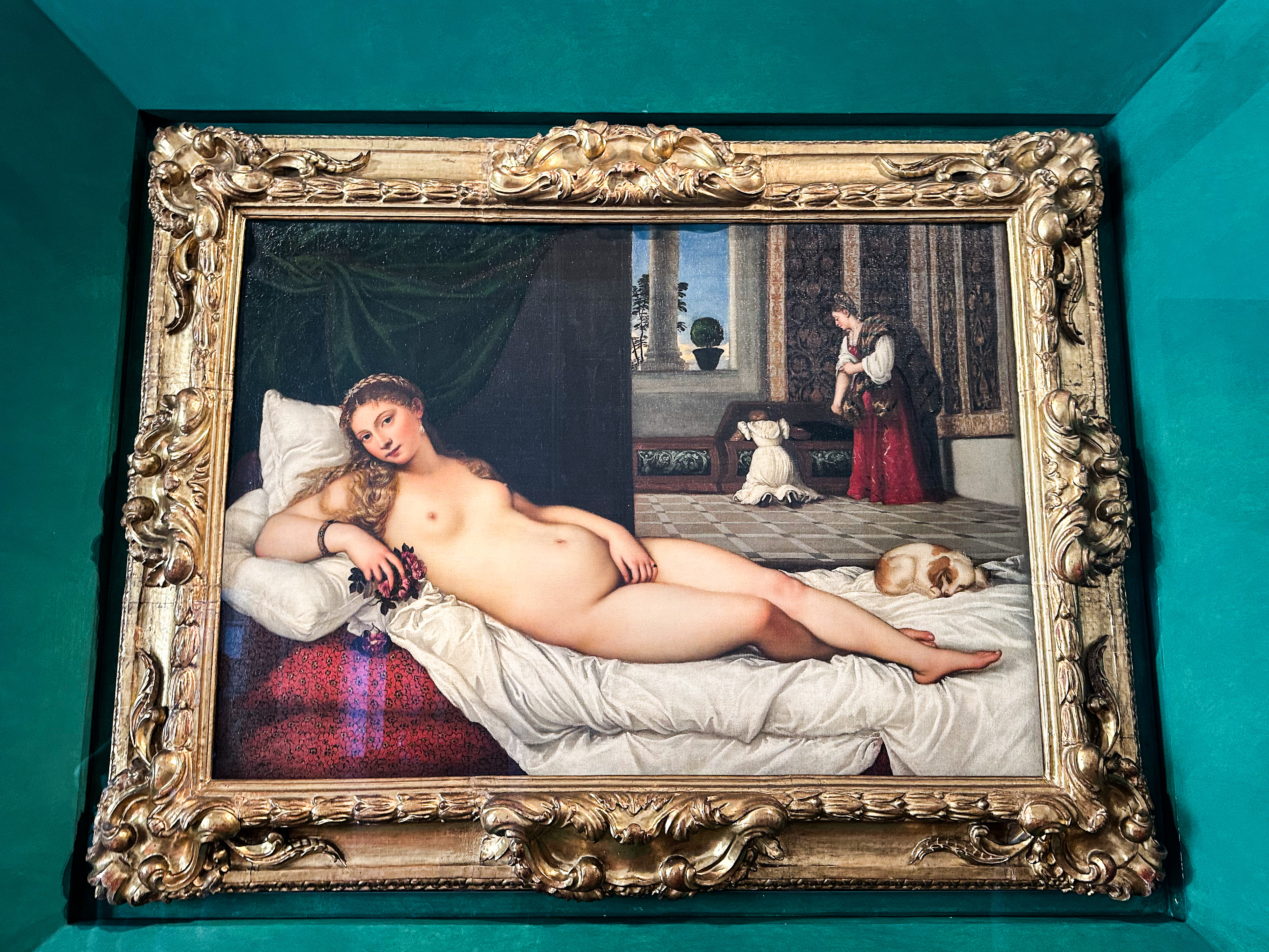
Venus of Urbino by Titian was painted in 1538 and depicts a young woman before she takes part in the “il toccamano”, a ceremony when a woman touches the hand of her groom to demonstrate her consent to his proposal. Although she is called Venus there is no proof this is who it’s supposed to be with many historians disagreeing on who she is and even what the scene depicts. This painting is controversial due to the seductive nature of the woman’s pose, with her hand covering her pubic area in emphasis and her flirtatious gaze at the viewer. The softness in her skin and curves brings forth a sensual depiction of the woman. The painting is often found at the center of feminist debate, with some reducing the artwork to the male gaze and pornography and others celebrating it as a depiction of a woman before her wedding promoting fertility and the consummation of marriage.
Things to Know: The Big Four
If you’re looking to see art from the big 4 of the Renaissance here are SOME of the places you can find their work in Florence.
Leonardo Di Vinci – The Uffizi Gallery: Annunciation, Adoration of the Magi and a Self-portrait
Michelangelo – The Galleria Dell’Accademia: David, The Uffizi: Doni Tondo, The Dumo Museum Pieta Bandini, Midici Chapel: New Sacristy
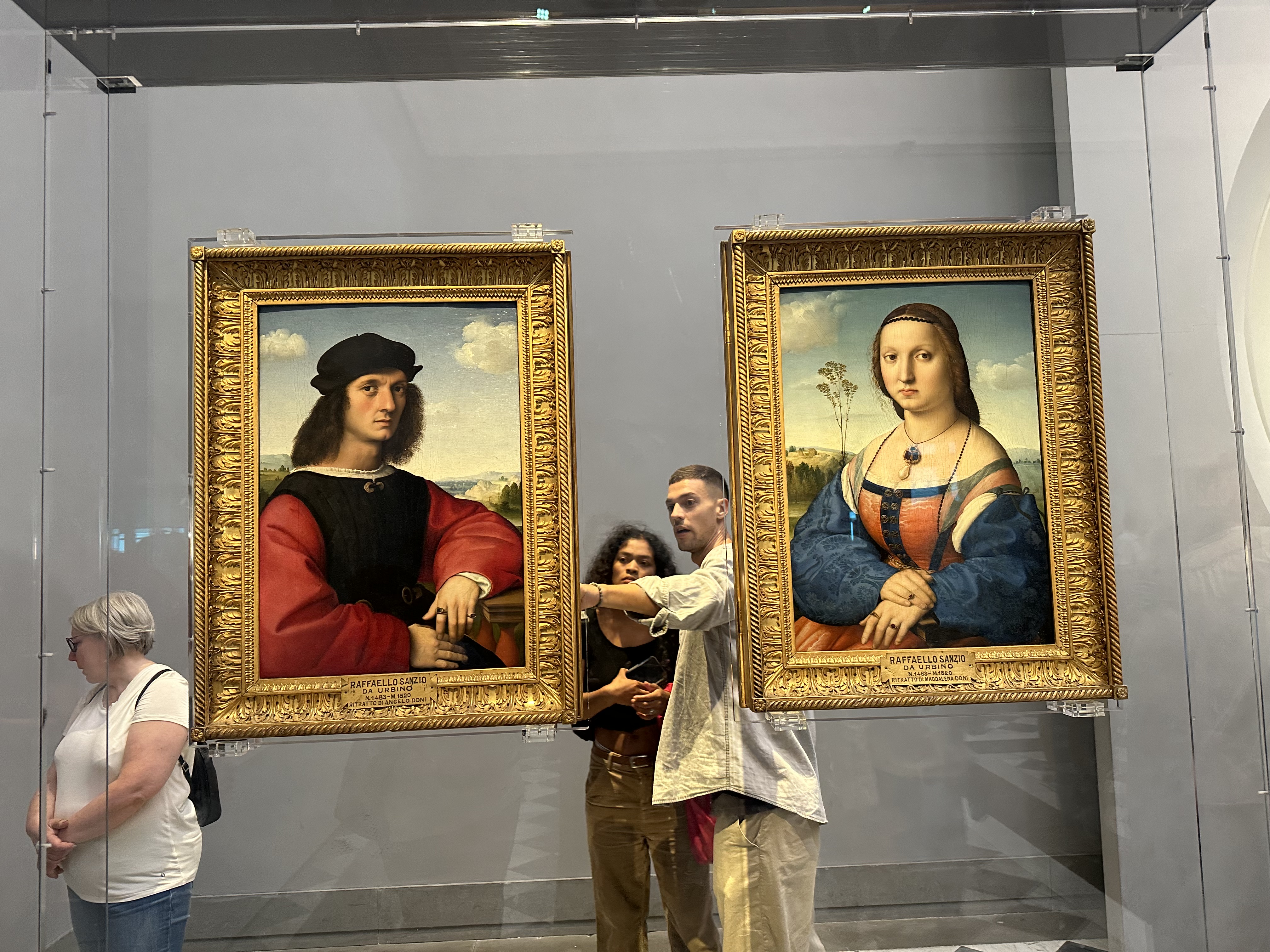
Raphael – The Uffizi: Portraits of Agnolo and Maddalena Doni (front); the Flood and Deucalion and Pyrrha (back), Madonna of the Goldfinch, and Portrait of Pope Leo X
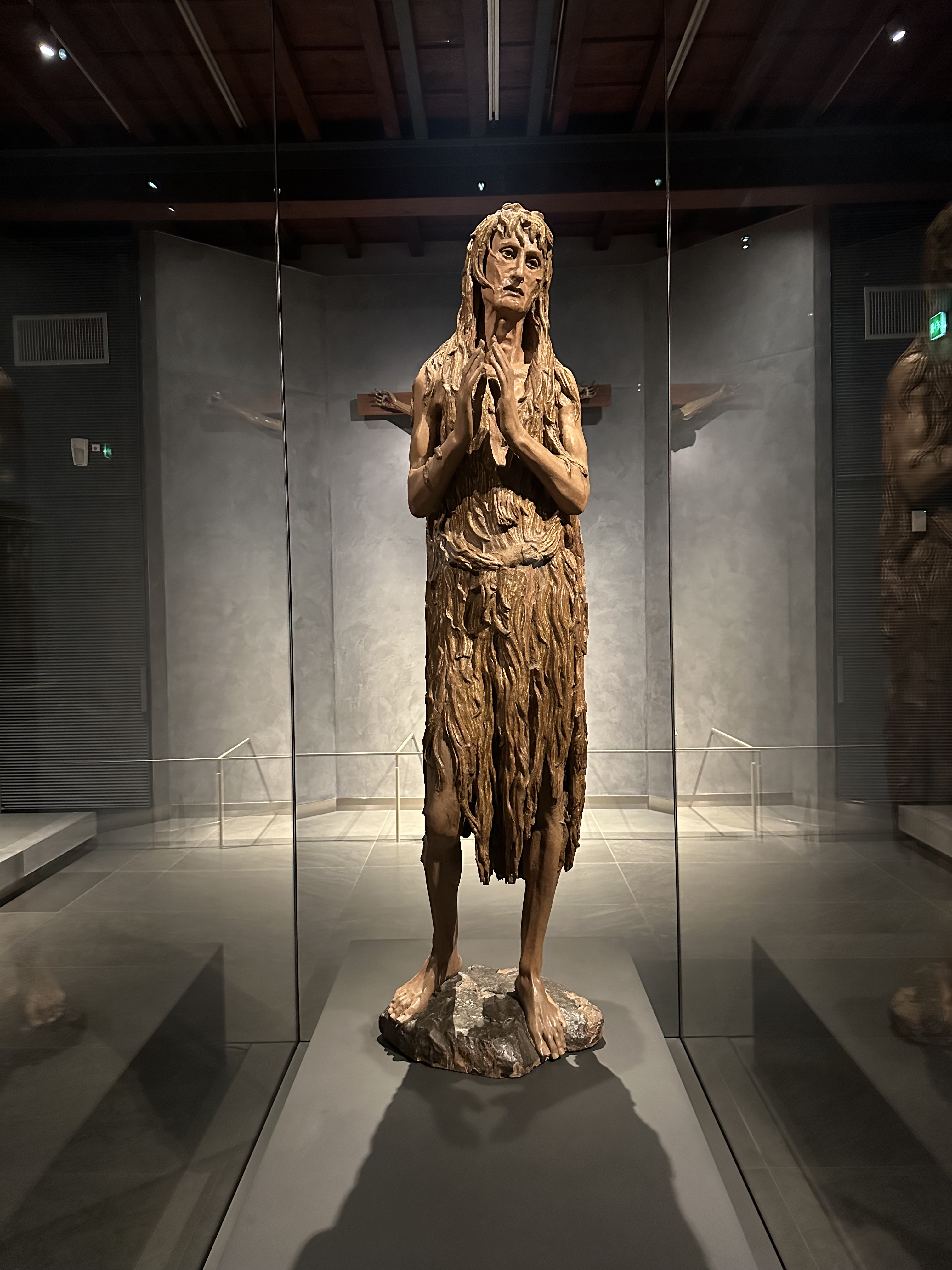
Donatello – Duomo Museum: Penitent Magdalene, the Prophets he made for the bell tower, Saint John the Evangelist. Bargello National Museum: David.

References:
Academia.org – Michelangelo’s David: Admire Worlds Greatest Sculpture
Canal Educatif a La Demande – ArtSlueth 3: Botticelli The Brith of Venus (final version) – Uffizi Gallery
Galleria Accademia Firenze – Artworks David Michelangelo
Florence Inferno – The Giorgio Vasari’s Last Judgement
Florence Inferno – Gates of Paradise
SmART History – Titian, Venus of Urbino
Uffizi Galleries – Venus of Urbino by Titian
Uffizi Galleries – The Birth of Venus by Sandro Botticelli
Visit Tuscany – Loggia Della Signora or Loggia Dei Lanzi
Visit Tuscany – Rape of the Sabine Woman by Giambologna
Wikipedia – Girolamo Savonarola
 The Great Big Wonder
Leave a comment